Continuous vs Sheet-Fed Printing Machines: Which Is Better?
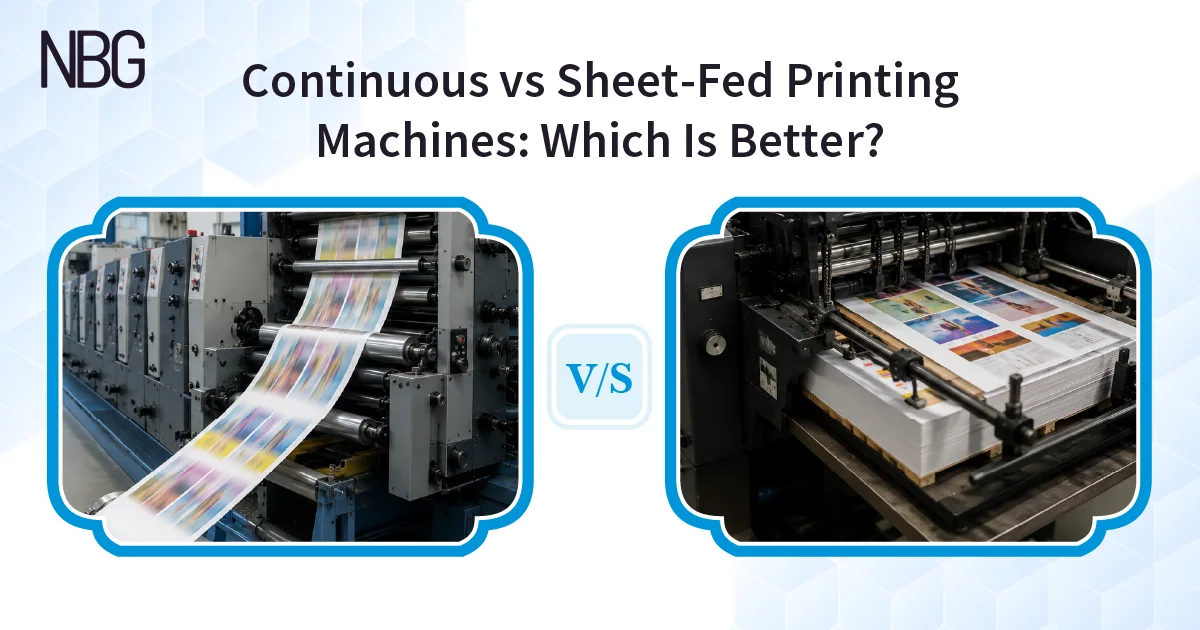
Have you ever wondered how businesses are able to select between continuous stationery and sheet-fed printing machines? From large-volume invoice generation to premium-quality commercial stationery, your choice of printing technology will directly impact the efficiency of your workflow. Continuous stationery printing machines are engineered for uninterrupted, high-speed output. Sheet-fed printing machines, on the other hand, offer benefits such as print precision, flexibility, and high-quality visual output. Understanding the differences between these two can help you select the right machine based on your operational needs. This blog provides a detailed comparison between the two to help your business make informed decisions.
What Is A Continuous Stationery Printing Machine?
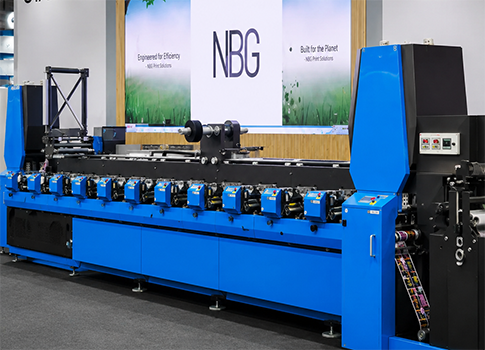
A continuous-stationery printing machine is a printing system designed to print on continuous paper rolls. Here are some common benefits of using a continuous-stationery printing machine:
- High-speed transactional printing operations designed for invoices, bill statements and payroll records.
- Advanced variable data capabilities for accurate printing of information and transactional records.
- Long-duration production capabilities that maintain print stability, especially during high-volume operations.
Discover our newspaper and offset printing machines that deliver consistent print quality across demanding printing environments.
Which Industries Use Continuous Stationery Printing Machines?
Continuous stationery printing machines are used for high-volume, repetitive and data-driven printing applications. Built on a continuous system, these support an uninterrupted workflow and consistent output. Here are some industries that commonly rely on these machines:
- Banking and financial institutions require transaction records, customer statements, and financial reports.
- Utility and billing sectors that include electricity, telecom, water, and gas service providers.
- Logistics and warehousing industries require support for the production of dispatch forms, shipping documentation and inventory tracking sheets.
- Manufacturing facilities that rely on continuous document generation for inventory management.
- Government organisations that handle high-volume printing of payroll records, tax statements, registration forms and structured data processing.
Looking for reliable printing systems that support your business requirements?
What Is a Sheet-Fed Printing Machine?
A sheet-fed printing machine processes individual paper sheets sequentially rather than feeding from a continuous paper roll. Designed for precision, these offer greater control for paper handling, print registration, colour consistency, and finishing quality.
Here are some common benefits of using a sheet-fed printing machine:
- High-precision multi-colour printing operations that require sharper image reproduction, consistency and refined print detailing.
- Premium finishing and post-print enhancement capabilities that involve coating, laminating, embossing, varnishing, and specialised finishing processes.
- High-quality graphic and branding applications where visual consistency, image sharpness, and typography precision matter.
Which Industries Use Sheet-Fed Printing Machines?
Sheet-fed printing machines are widely used for their high-quality print output, precision-based production, and flexible commercial printing capabilities. These machines are highly suitable for businesses that focus on branding, presentation quality, and detailed print applications. Here are some common industries that require the use of sheet-fed printing machines:
- Commercial printing and publishing industries that create brochures, catalogues, flyers, magazines, and other high-resolution promotional materials.
- Packaging and labelling converters that require ultra-sharp colour fidelity for folding cartons, product labels, and premium branding mockups.
- Advertising and marketing agencies that require the use of detailed promotional materials, point-of-sale displays, and customised print production.
- Corporate and business sectors for letterheads, annual reports, presentations and branded communication materials.
Related Reading: Check out this detailed guide on the key differences between digital and offset printing.
Key Differences Between Continuous and Sheet-Fed Printing Machines
Both systems serve distinct operational demands. Use the comparison table below to evaluate which technology aligns best with your production volume, substrate needs, and quality requirements:
| Feature / Metric | Continuous Stationery Printing Machines | Sheet-Fed Printing Machines |
|---|---|---|
| Feeding Mechanism | Continuous roll/web format for uninterrupted paper flow | Individual pre-cut paper sheets fed sequentially |
| Production Speed | High-speed, uninterrupted output designed for industrial volumes | Controlled, moderate speeds optimised for handling precision |
| Print Precision & Detail | Consistent, stable quality focused on text, codes, and transactional data | High-precision multi-colour reproduction, crisp graphics, and fine detailing |
| Substrate Flexibility | Best for standardised paper weights and uniform web formats | Versatile across diverse paper weights, textures, and speciality substrates |
| Post-Print Finishing | Inline continuous folding, slitting, and sprocket-perforation | Premium post-print enhancements including varnishing, embossing, laminating, and foil stamping |
| Primary Applications | Invoices, utility bills, logistics labels, payroll, and banking records | Marketing collateral, brochures, luxury packaging mockups, and annual reports |
| Optimal Production Profile | Long-run, data-driven, continuous industrial operations | Short-to-medium runs requiring high aesthetic impact and flexibility |
Which Printing Machine Should You Choose for Your Business?
Choosing between continuous stationery and sheet-fed printing machines generally depends on factors such as your workflow, quality expectations, and production requirements. Your decision ultimately depends on your target order volumes, required turnaround speeds, and substrate requirements.
A continuous printing system is generally designed for uninterrupted production, faster execution, and consistent output. You can choose sheet-fed systems for their print precision, flexible substrate handling, and sharp image reproduction. Backed by decades of experience, NBG is a leading Indian printing machine manufacturer and supplier offering advanced, in-house precision engineering and technology-driven production capabilities.
Conclusion
Choosing between continuous and sheet-fed printing systems isn't about picking a superior technology—it's about matching the right machine to your specific production demands. With printing environments moving towards automation, you’ll require solutions that deliver both reliability and performance. Continuous printing systems remain highly valuable for industries that value high-speed performance. With sheet-fed printing machines, the focus is often on the precision and finishing quality. Get in touch with our team if you're looking to invest in technologically advanced and application-focused machinery.