What Sets Indian Commercial Printing Machines Apart from Chinese Competition
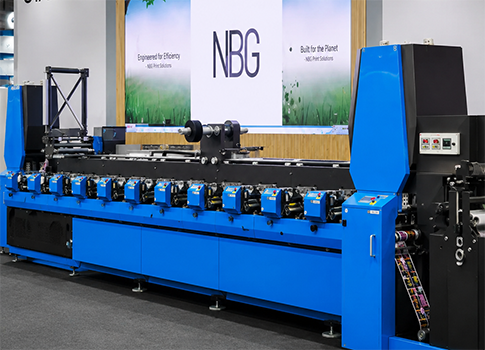

In the high-stakes printing and packaging industry, China has long been the default answer. Why? Affordable, accessible, and fast to ship. But the full cost of that choice often shows up later in prolonged downtime, hard-to-reach service teams, and machines that don't hold up under continuous production pressure.
That's why more global buyers are turning toward Indian commercial printing machines.
We at NBG Printographic Machinery, leading printing machine manufacturers in India, are proving our worth where it counts. Our machines are engineered for continuous, high-pressure production environments and backed by a service network that keeps them running.
In this blog, let us look at why global buyers are increasingly turning to India.
Why Buyers Consider Chinese Machines
Let’s be straightforward about it: Chinese machines have a real, legitimate appeal, being priced lower than comparable models from other markets. For buyers running high-volume and standardised operations on tight budgets, that gap is hard to ignore.
But the price at purchase is only one part of the story. When something goes wrong, spare parts which are shipped internationally, can take weeks to arrive. Also, getting a service engineer on-site means expensive travel and long wait times, and there’s the accountability gap – many Chinese suppliers are trading companies, not manufacturers, meaning the person you bought from isn't the one who built the machine.
Evaluating commercial printing machines? Let's help you make the right call
Why Indian Printing Machines Are Earning Global Trust
The advantages of buying Indian printing machines aren’t just marketing claims; they’re structural and compound over time.
1. Engineered for Diverse Operating Conditions
The biggest challenge for global buyers isn't just performance; it's reliability under real-world conditions. High humidity, unpredictable power supply, non-stop multi-shift production. These aren't edge cases; they're everyday realities.
That's exactly what Indian printing technology is built for. Our machines don't just perform in controlled environments. They're designed to hold up where it actually matters. Behind that durability is a rigorous manufacturing process, advanced CNC machining and CMM quality control measures that ensure every machine we deliver is built to run consistently, without compromise.
2. Certifications, Compliance, and Export Readiness
Buying machinery internationally comes with a layer of risk. For global buyers, here's how that risk is addressed.
Indian printing machinery adheres to strict global benchmarks, including ISO 9001 quality management systems, ensuring consistency at every stage of production. Every machine destined for export goes through rigorous pre-dispatch inspections and meets CE compliance standards, so when it arrives at your facility, it's operationally ready from day one.
3. Customisation That Catalogue Machines Can't Match
Here is where Indian manufacturers truly differentiate themselves: we program equipment around your specific substrates, line speeds, and converting requirements. For operations running flexo printing machines, that means precise configuration across anilox selection, ink viscosity, and substrate handling, not a generic setup pulled from a catalogue.
The result is a setup that actually fits how you work, not how a catalogue was designed. That's the difference between a vendor and a technology partner.
Further Reading: If you are currently evaluating your options, this definitive breakdown on “How to Choose the Right Flexo Printing Machinery” provides a practical roadmap for aligning these custom configurations with your production goals.After-Sales Support: The Factor That Decides Your ROI
1. Proximity Means Faster Response, Lower Downtime
When a machine goes down, every hour costs you money. That's why having a service engineer who can reach you domestically within hours and internationally within days is not a nice-to-have; it's a business-critical advantage. Additionally, we manufacture and keep spare parts in-house, which means less downtime and fewer disrupted production schedules.
2. Long-Term Service Relationships, Not Transactional Sales
Here's something we hear often from businesses: "Our previous vendor disappeared after the sale."
We've built our entire after-sales programme to be the opposite of that. A dedicated team of engineers and technicians handles everything from installation and commissioning to ongoing support, backed by an excellent sales and service network.
Industries That Benefit Most from Indian Printing Machines?
1. Publishing & Media Industry
Newspaper and book publishers operate under very tight deadlines. So, there's no room for downtime. High-speed web offset presses are designed for that environment, delivering the volume with consistency and durability that this industry depends on.
2. Luxury Retail, Electronics, & Gifting Industries
Packaging isn't an afterthought in premium categories, as the box is a part of the brand experience. Rigid box-making machines deliver structural precision, accurate folding, and consistent gluing – requirements that these segments demand.
3. Flexible Packaging & Paper Converting Industries
FMCG and pharmaceutical companies operate with tight specifications, as even a small printing error can result in massive damage. Our slitter rewinders and sheeters handle plastic film and paper with accuracy. This ensures every slit roll and cut sheet is consistent, compliant, and ready for the next stage of production.
Built for your operation, not a catalogue. Get equipment configured around your needs
Conclusion
Price is a good starting point, but you shouldn’t base your decisions on it. The right commercial printing machine delivers consistent output and is built to run reliably in the long run. That's what this decision ultimately comes down to: not just what's built, but who stands behind it.
At NBG Printographic, we have been working with businesses at every stage, from startups commissioning their first paper bag line to established converters upgrading a flexo press.
If you’re evaluating your next purchase, it’s worth looking beyond the price tag. Explore our full range of printing and converting machines and get in touch with our team.
FAQs
What are the advantages of Indian printing machines?Indian printing machines are known for strong build quality and application-specific customisation. Manufactured to international standards and backed by local service networks, they outperform cheaper alternatives over a 10–15 year lifespan.
Are Indian printing machines more durable than Chinese machines?Yes. Indian machines are built for demanding operating conditions. Combined with locally available spare parts and responsive servicing, they tend to hold up better in the long run.
Which is better for commercial printing: Indian or Chinese printing machines?For commercial printing operations where uptime and print consistency are priorities, Indian machines offer a stronger long-term proposition. Chinese-built ones may have a lower entry cost, but the total cost of ownership over several years tells a different story.
Do Indian printing machine manufacturers provide after-sales support?Yes. We provide structured after-sales programmes covering installation and scheduled maintenance. We also provide operator training and ongoing technical support. For more information, feel free to contact our team.
What types of industries use Indian printing machines?Packaging, FMCG, publishing, pharmaceuticals, and textile industries use Indian printing machines for high-speed, cost-effective production of boxes, labels, food wraps, textbooks, and branded apparel.