Offset vs. Flexographic Printing: Which One Delivers More Value?
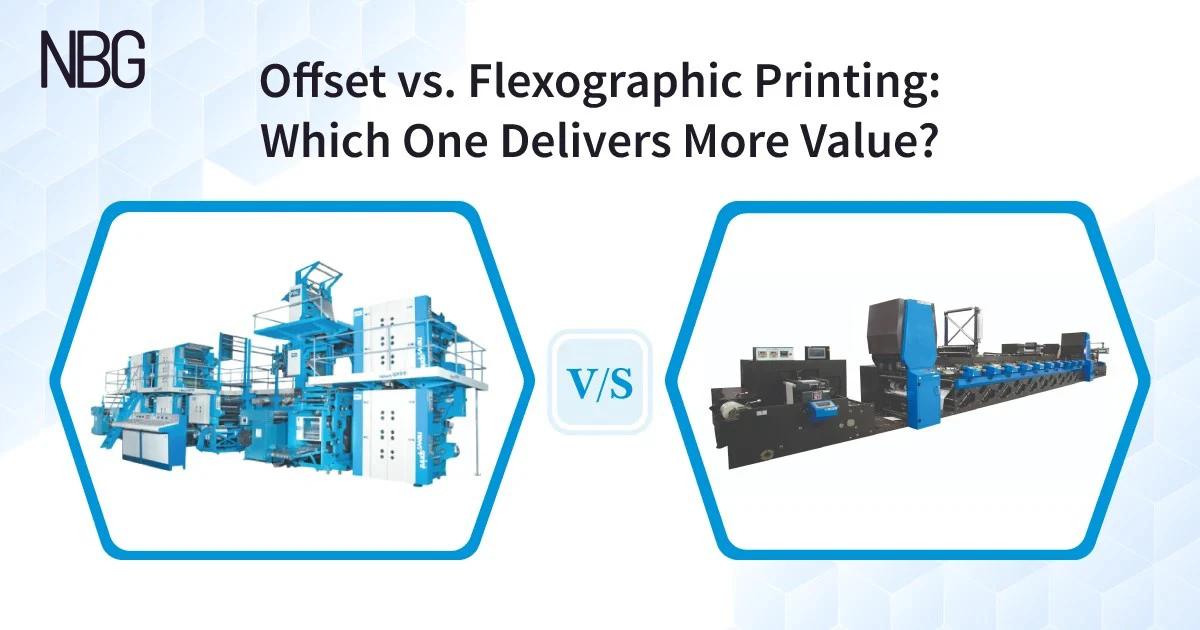
Want to select a printing process that comes out clean on the parameters, like cost-effectiveness, quality, and speed, but don't know which process is best for you? Rest assured, we have got you covered. We will explore the difference between flexographic and offset printing and help you select the best process for your printing needs.
What is Flexographic Printing?
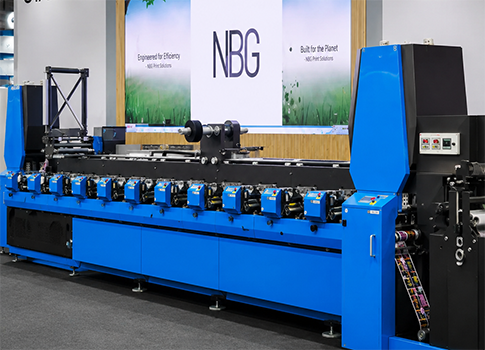
Flexographic printing is a modern, high-speed, and roll-feed web printing process that provides adaptability to various substrates, like paper, plastic films, metallic foils, etc. The process uses high-end printing parts, like an anilox roll, plate cylinder, and impression cylinder, to transfer ink directly onto the substrates from a photopolymer-made raised image plate. It has become a popular printing process for packaging, labels, and large-volume runs.What is Offset Printing?
Offset printing is a traditional printing process that uses plates and rubber blankets to transfer the image onto the substrate. This process is only reliable for printing papers and has historical dominance in printing books, magazines, and brochures.Flexographic Printing vs. Offset Printing: Key Differences
1. Printing Process
The flexoprinting process is a direct process comprising flexible plates that directly transfer the ink to the substrates. On the other hand, the offset printing process involves multi-stage printing, which includes transferring ink via plates and blankets. Offset printing consumes more time as compared to Flexo printing.2. Substrate Compatibility
The flexographic printing process can print various porous and non-porous substrates, like paper, corrugated cardboard, plastic films, foil, and fabric. Whereas offset printing can only print on paper, which restricts it when it comes to substrate versatility like flexo printing has.3. Setup and Turnaround Time
The turnaround time of flexo is faster because of quicker setting time and higher efficiency. It is suitable for short and long printing runs. On the contrary, offset printing needs more time to set up due to the multi-stage printing process and lack of modern printing system integration.4. Print Quality
The flexographic printing offers high-resolution printing that prints at speed without making the print smudged. It offers a variety of colour ranges that allow a variety of designs to be put onto a variety of materials while maintaining the consistent print quality. On the other hand, offset printing typically offers sharpness for text-heavy work and is suitable for papers only.5. Environmental Impact
The flexographic process uses eco-friendly water-based ink that has low VOC emissions that minimally impact the environment. On the other hand, offset printing uses more chemicals, solvents, and water, which causes high-VOC emission, thus impacting the environment negatively.6. Advantages
Printing onto a range of substrates, high speed, cost-effectiveness over long runs, customisability, and quicker setups are the advantages of flexographic printing. Whereas high text quality, colour consistency on paper, and cost-effectiveness for short and medium runs are the advantages of offset printing.Looking for a cost-effective and high-speed printing solution?
Cost Comparison: Flexographic vs. Offset Printing
1. Initial Setup
Flexo printing requires a high investment initially, but over time it offers extremely cost-effective print per unit. Offset printing can be costly in initial setup due to the multi-stage printing process, plates, and preparation work.2. Per Unit Cost
Despite the high initial cost, flexo printing offers cost-effective print per unit for long runs. The high speed, quicker setup, and low ink wastage progressively lower the cost of the print over time and make it highly profitable for packaging and labelling and repeated job printing facilities. Conversely, offset printing offers economical printing per unit for shorter runs, despite the high offset printing machine prices.3. Ink & Energy
Flexo lets the facilities save costs on ink, as the inks used in flexo have low viscosity, are fast-drying, and offer space for using a wide range of inks in the flexo printing process. Offset printing demands high investment in ink and energy for long runs, just the opposite of flexo.Why Flexo is the Future
With continuous improvement and integrating modern technologies into flexography printing, it has evolved to match the current and future printing demands. The high-definition printing and suitability to various porous and non-porous materials make it a standout printing process for a range of facilities. Given the features, suitability with demands, and space for scalability due to modular design, it is safe to say that flexo is a future-ready printing process that is going to be in demand for years to come.Conclusion
So, here we are, having explored the difference between flexographic and offset printing. While exploring, we have seen that flexographic printing has beaten offset printing in nearly every segment and came out as a winner in this intense exploration. So, choose flexographic printing for every printing need and drive profitability. NBG Printographic is a renowned printing machine manufacturer in India and is known for being a high-quality flexo printing machine manufacturer and supplier. If you are looking to invest in a flexographic printing machine, we can help you out. Contact us today to learn more!FAQs
Can flexographic printing be used on paper?Yes, flexographic printing can be used for papers also, besides offering suitability to various porous and non-porous materials.
Which printing method is better for packaging materials?Flexo printing is better for packaging materials compared to offset printing, as it offers high speed and economical print per unit.
Which printing method produces higher image quality?Flexo printing is known for producing high-quality images even on a range of substrates, whereas offset printing provides quality prints only for text-heavy images.
Which printing method is faster for high-volume jobs?Flexographic printing is the best for high-volume prints, as it is optimised for speed and cost-effective print per unit over time.
How do printing costs vary between flexographic and offset printing?Printing costs of flexographic and offset printing vary depending on the initial setups, running cost, material versatility, and efficiency over long runs. Flexographic printing excels at all the segments and provides cost-effective print per unit.
Which printing process is more environmentally friendly?Since flexo printing uses water-based ink, it stands as a more environmentally friendly printing process than offset.
Is flexographic printing better than offset printing for packaging?Flexographic printing is better than offset printing due to the ability to print a range of substrates, be they porous or non-porous. Also, flexo printing is more cost-effective for high-volume and long-run prints.