Applications of Different Types of Paper Bag Machines Across Industries
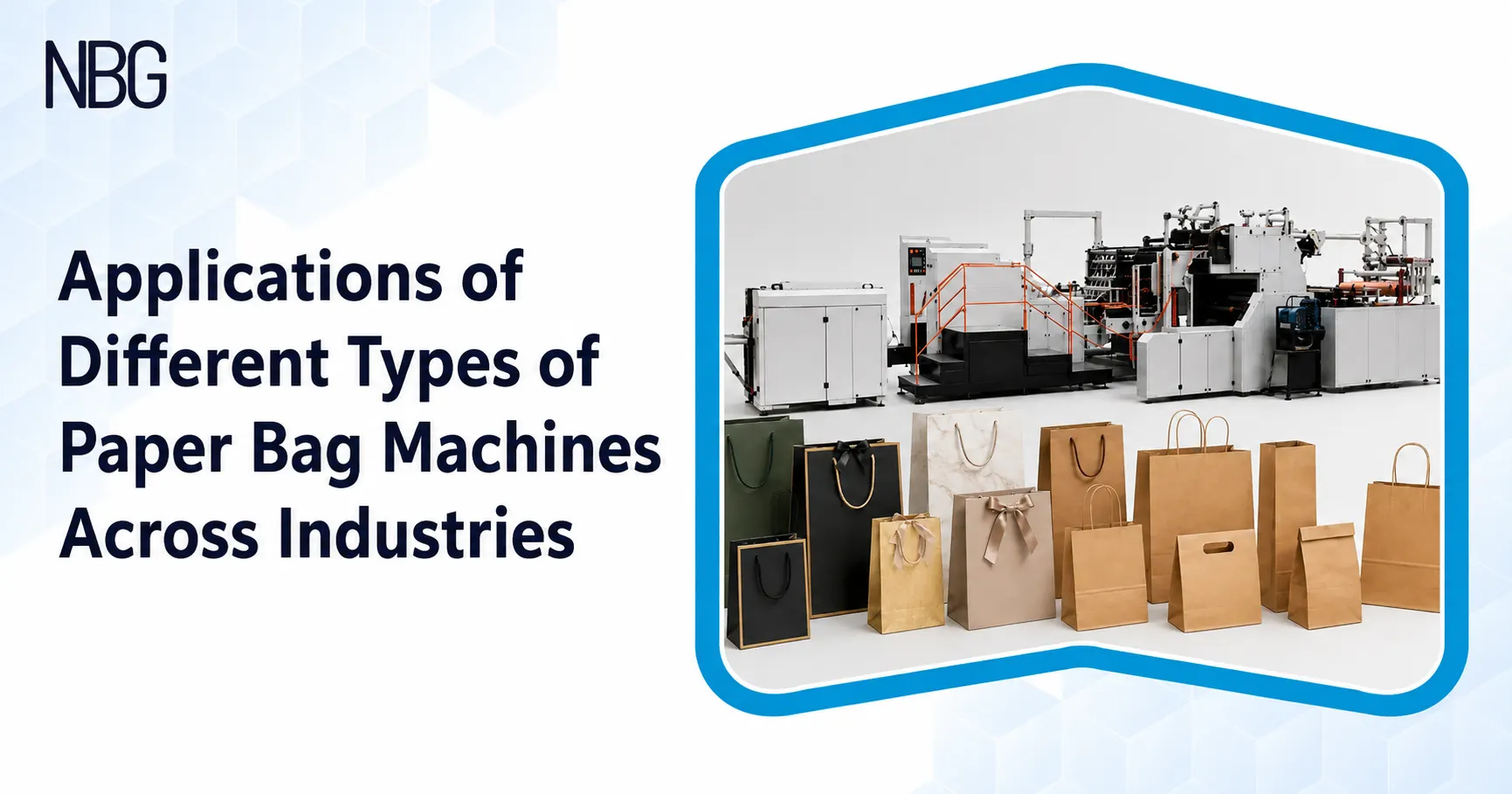
A decade ago, most retailers treated paper bags as a courtesy, handed out at checkout without much consideration. That has changed considerably. Plastic bans have spread across dozens of countries and states, and what was once an afterthought has become a core packaging decision for retailers, food brands, and luxury houses alike. Behind nearly all of this shift sits a single category of equipment: the paper bag machine, and more specifically, which type of paper bag machine an industry chooses to rely on.
This blog examines how these machines are built, the different types available, and, most importantly, which industries rely on each type and why.
Why Eco-Friendly Packaging Stopped Being Optional
Regulatory pressure explains part of the shift toward eco-friendly packaging solutions, though it is not the whole explanation. Consumer expectation has moved faster than most regulations. A brand offering a plastic bag today is perceived differently than it would have been five years ago, and retailers have observed this shift directly in customer response at the point of sale.
The paper addresses the visible concerns: biodegradability, recyclability, and a lower carbon footprint per unit, but this only holds at a commercial scale if the manufacturing behind it can match plastic's speed and cost. This is the gap that paper bag machines were built to close, which is why demand has grown well beyond boutique packaging into full industrial production lines.
How the Paper Bag Production Process Works
Before examining specific machine types and their industry applications, it helps to understand the production process each of these machines is built around:
- Raw material feed: Kraft paper, in varying GSM weights depending on the required load capacity, enters the machine either from a continuous roll or as pre-cut sheets, depending on the machine type.
- Folding and tube formation: The paper is folded into a tube or gusseted form, which becomes the body of the bag.
- Bottom formation: The base is formed and sealed, either flat or square, depending on the intended application.
- Seam sealing: Adhesive is applied at the seams to hold the tube and bottom together under load, with precision at this stage directly affecting the bag's carrying capacity.
- Handle attachment: Where the design requires handles, rope, twisted paper, or flat reinforced strips are attached before the bag proceeds further along the line.
- Cutting, counting, and stacking: Finished bags are cut to length, counted automatically, and stacked for packing.
A mid-range automatic line can produce approximately 80 to 150 bags per minute, depending on bag size and handle type, and the tolerances involved are considerably tighter than they appear from outside the machine.
A bottom seal misaligned by even a millimetre can result in a bag that fails under load, which is precisely why mechanical precision matters as much as the quality of the paper itself.
Types of Paper Bag Machines and the Industries They Serve
Not every production requirement calls for the same machine, and this is where the connection between machine type and industry becomes most apparent. The types of paper bag machines available generally divide along two lines: how the bag is fed, roll-fed versus sheet-fed, and how much of the process runs without manual intervention.
1. Automatic Paper Bag-Making Machines with Rope and Flat Handles Series
Automatic paper bag-making machines with rope and flat handles are built for high-volume production where handled bags, the type used across retail and food service, must come off the line ready for use with minimal operator involvement. Manufacturers scaling for retail chains and food-service supply typically rely on this category, where handle consistency across thousands of units per shift is a hard requirement, not a preference.
2. Semi-Automatic Sheet-Fed Square-Bottom Paper Bag Machine
Semi-automatic sheet-fed square-bottom machines suit operations still building production volume or manufacturers producing shorter runs with frequent size changes. These are commonly found among regional packaging converters and smaller pharmaceutical or cosmetic suppliers, where full automation is not yet justified by throughput.
3. Fully Automatic Sheet-Fed Square-Bottom Paper Bag Machine
Fully automatic sheet-fed square-bottom machines step up from there, holding tighter tolerances at higher speeds for standardised square-bottom bags, the format most common in grocery and food retail. These machines are most closely associated with large-format supermarket chains and packaged food manufacturers.
4. Roll Fed Square-Bottom Paper Bag Machine
Roll-fed square-bottom machines remove the sheet-cutting stage entirely by feeding directly from a paper roll, typically resulting in lower material waste and faster changeover for continuous, high-volume runs. Industrial and agricultural packaging operations, producing bags for flour, seed, and pet food, frequently rely on this configuration for sustained output.
5. Automatic Square-Bottom Paper Bag Machine
Automatic square-bottom machines with flat handles, overfolded or upright, along with their twisted-rope-handle and flat-handle counterparts, are directed at retail and boutique packaging specifically, where finish and handle style carry as much weight as structural performance. Luxury retail and premium cosmetics brands are the primary users of this category.
6. Fully Automatic Sheet-Fed Square-Bottom Paper Bag Machine
A fully automatic sheet-fed square-bottom paper bag machine sits at the top of the sheet-fed range, built for manufacturers who have already outgrown semi-automatic output but still need the sizing flexibility that sheet feeding allows over roll feeding. Sheet-to-bag conversion, bottom forming, and stacking run as one continuous automated sequence, which keeps output high without sacrificing the changeover speed needed for frequent size or bag-style shifts. Large packaged food manufacturers and supermarket chains running multiple bag formats off a single line are the primary buyers at this level, since it removes the trade-off between volume and flexibility that smaller sheet-fed setups still carry.
Applications Across Industries
The industrial applications of paper bag machines extend well beyond the standard shopping bag.
1. Grocery and General Retail
This remains the largest volume segment for the industry, relying on a square bottom paper bag machine built to stand upright and carry weight without tearing at the base. Retail chains operating high daily footfall require consistent bag strength across every batch, which is where these automated lines justify their cost.
2. Food Service
Takeaway bags, bakery bags, and grease-resistant variants follow closely behind retail in volume, though they carry an additional requirement: specific paper coatings that the machine must accommodate without reducing line speed.
3. Industrial and Agricultural Packaging
Products such as flour, seed, and pet food require heavier-gauge paper, where load-bearing strength matters more than finish. A bag that appears plain but withstands repeated handling is the actual specification here, not appearance.
4. Pharmaceutical and Cosmetic Packaging
This segment prioritises precision and finish quality over raw strength, since the bag often forms part of the product's perceived value at the point of sale.
5. Luxury Retail
At the far end of the spectrum, appearance is close to the entire specification. Fold consistency, seam cleanliness, and finish quality take precedence over load capacity.
This range answers a question buyers ask frequently: paper bag machine uses are not confined to a single industry because the underlying mechanics, folding, sealing, and handle attachment adapt to nearly any paper-based flexible packaging format with the appropriate tooling changes.
Food Packaging and Luxury Retail: Two Ends of the Same Machine Category
Food packaging solutions built on paper bag machines must satisfy requirements that most other applications do not. Grease resistance, moisture barriers, food-safe coatings, and in many markets, specific certifications, all need to hold up while the machine continues running at commercial speed. A bakery bag that performs adequately on day one but fails once warm bread sits inside it for twenty minutes is not a usable product, regardless of production speed.
Luxury retail requires the opposite kind of precision. A luxury paper bag manufacturing machine must produce sharp, consistent folds, clean seam lines, and finishes, foil stamping, embossing, and premium paperboard weights that appear considered rather than mass-produced, even though the bag was manufactured on an automated line at genuine commercial volume. Manufacturers running printed finishes at this level should also evaluate their printing machine supplier carefully, since print quality and line integration affect final output as much as the bag-forming machine itself. Achieving both ends of this spectrum on different production runs is usually what distinguishes a general-purpose machine from one engineered with that flexibility from the outset.
Choosing the Right Machine for Your Industry
Selecting between these machine types depends on a handful of practical factors: expected volume, bag style, and the flexibility required across different bag formats for the target industry.
For manufacturers comparing options, evaluating paper bag-making machine price against expected throughput is usually the first consideration since a fully automatic line only becomes cost-effective past a certain volume threshold. A square-bottom machine suits standard retail and food formats, while a handled-bag machine is worth prioritising where handled bags make up a significant share of planned output.
Conclusion
Paper bag machines have moved well beyond the simple mechanical role most people assume they occupy. The right machine, matched to the appropriate bag format, paper grade, and target industry, is now a genuine competitive factor for retailers and manufacturers under pressure to move away from plastic without slowing production. Whether the priority is food-grade durability, luxury finish, or standard retail volume, the equipment behind the bag matters as much as the bag itself.
NBG Printographic Machinery, established in 1990, has spent over three decades engineering roll-fed, sheet-fed, and paper bag with handle-making machines alongside the printing and converting equipment that supports them. For manufacturers evaluating entry into paper bag production or seeking to expand an existing line, get in touch with NBG's team to discuss which configuration suits your product mix and target industry.
FAQs
What are the different types of paper bag machines?
Machines broadly divide into roll-fed and sheet-fed types, and further into semi-automatic and fully automatic lines, with additional variants for flat-bottom, square-bottom, and handled bag formats.
What are the applications of square bottom paper bag machines?
Square-bottom machines are used primarily for grocery retail, food service, and industrial packaging, where the bag must stand upright and carry weight without tearing at the base.
What are the benefits of using an automatic paper bag making machine?
Automatic machines deliver higher output per hour, tighter consistency across bags, and reduced dependency on manual labour compared to semi-automatic or manual production methods.
Which industries use paper bag manufacturing machines?
Retail, food service, pharmaceuticals, cosmetics, agriculture, and luxury goods all rely on paper bag machines, each adjusting paper grade, coatings, and finish to their specific requirements.
Can paper bag machines be used for food packaging applications?
Yes. With the appropriate paper grade, coatings, and food-safe adhesives, the same core machine types used for retail bags can produce grease-resistant and moisture-resistant bags suited to food packaging.